
Yerjan Babakumarov outlines guidelines for tracking organizations due to the surge of infections in Almaty
In the bustling city of Almaty, Kazakhstan, the local authorities have stepped up their efforts to prevent the further spread of COVID-19, particularly in high-risk areas such as public places like restaurants, cafes, and bars.
Deputy Mayor Erjan Babakumarov has instructed the monitoring groups at the city's district akimats to intensify their inspections in these establishments. This move comes as a response to the rising number of cases in the city, with over 41% of infections traced back to such public places.
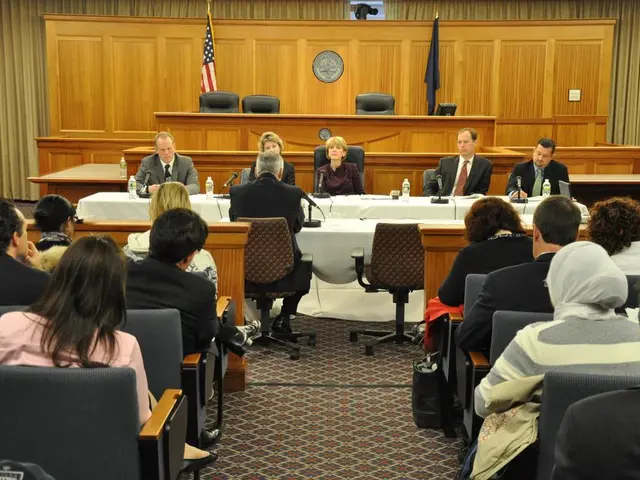
Recently, a meeting was held online by Almaty Mayor Bakytzhan Sagintayev, Deputy Mayor Erjan Babakumarov, the head of the Department of Sanitary and Epidemiological Control, and the city's chief state sanitary doctor, Zhandarbek Bekshin. The meeting was also attended by the mayors of the city's districts, the heads of the departments of public health, entrepreneurship, and investments.
During the meeting, it was reported that the highest incidence of the virus is among people aged 20-39 (35%) and 40-59 (31%). Compared to the first decade of December 2020, the number of cases has increased by 1.7 times.
As a result, the specialized court of Almaty has issued decisions to impose administrative fines and suspend the activities of 16 business facilities. A total of 1,014 protocols on administrative offenses for non-compliance with restrictive measures were drawn up.
Some of the establishments affected by these measures include LLP "Orangeeri GRUP," which operates Restobar "Orangeeri" in Medeu District, and LLP "Suddenly," which manages Cafe-Bar "Hookan Dreams" in an unspecified district. Other establishments include Cafe "Sauybay," located in an unspecified district, and Cafe "Reya," Cafe "Primera," Cafe "Agaiyn," and Cafe "Karakum," all of which are in the Nauryzbai District.
Bar "Adi" is in the Zhetysu District, while Bar "Sky" is owned by LLP "Global Food and Beverage Service" in an unspecified district. The Karaoke "Vivaldi" and Night Club "Qweer" are also located in unspecified districts. Cafe "Tastybulak" is in the Nauryzbai District, and Cafe "Shashlychnyi Dvor" is located in the Tursib District.
As of today, 20,111 cases of coronavirus infection have been registered in Almaty, with 131 new cases reported in the last 24 hours. Since January 1, 2021, the average number of cases has been between 100 and 130.
For the most accurate and current information regarding updated COVID-19 prevention measures for businesses in Almaty, it would be advisable to consult official local government sources or local news outlets. The United Nations' resources for Kazakhstan, such as the COVID-19 Situation Report, can also provide general information on pandemic responses in the country. Local health authorities and business organizations might also provide detailed guidelines tailored to businesses in Almaty.
- In the realm of science, researchers are exploring various solutions to combat the ongoing COVID-19 pandemic.
- Sleep patterns have experienced disruptions worldwide due to the stress and anxiety caused by the virus.
- The workplace-wellness industry is promoting measures to maintain employee health and prevent the spread of infections.
- Medical conditions like diabetes, heart disease, and cancer are known to increase the severity of COVID-19 symptoms.
- Respiratory conditions such as asthma and COPD pose additional risks for individuals infected with the virus.
- Digestive health issues can also weaken the immune system, making individuals more susceptible to COVID-19.
- Eye-health concerns have arisen due to the extended use of personal protective equipment (PPE) and screens for work-from-home arrangements.
- Hearing loss or impairment, even if temporary, can make it difficult for individuals to follow COVID-19 safety guidelines.
- Health and wellness instructors are advocating for regular fitness and exercise to boost the immune system and combat mental stress.
- Sexual health services are adapting to provide essential care while minimizing the risk of infection.
- Autoimmune disorders may complicate the course of COVID-19, requiring additional therapies and treatments.
- Climate change can indirectly impact the spread and severity of COVID-19 by affecting vulnerable populations and exacerbating existing health issues.
- Mental health awareness is crucial in managing the physical and psychological effects of the pandemic.
- Mens' health issues, such as prostate cancer and depression, have seen heightened attention during the pandemic.
- Skincare products are being developed to protect the skin against COVID-19 without compromising its moisturizing and nourishing properties.
- Therapies and treatments, like those for Alzheimer's and autism, are being researched for their potential in managing neurological symptoms caused by COVID-19.
- Nutritionists emphasize the importance of a balanced diet in supporting the immune system during the pandemic.
- Aging populations face a greater risk from COVID-19, prompting integrated care strategies for health and wellness in seniors.
- Womens' health care, including fertility treatments, menstrual disorders, and breast cancer screenings, have been affected by the pandemic.
- Parenting resources have proliferated to help families navigate monotonous routines, childcare challenges, and online learning during lockdowns.
- Weight management programs have shifted their focus to virtual consultations during the pandemic.
- Cardiovascular health issues have been exacerbated by sedentary lifestyles, stress, and reduced access to healthcare facilities during the pandemic.
- The industry is evolving to accommodate telemedicine, remote consultations, and virtual meetings in response to the pandemic.
- Medicare regulations are undergoing changes to provide flexibility and extend benefits for seniors during the pandemic.
- CBD products, marketed for their potential health benefits, have gained popularity as potential treatments for COVID-19 symptoms.
- Environmental science research focuses on understanding the impact of climate change, air pollution, and deforestation on COVID-19 transmission.
- Finance, investment, and wealth management strategies have adapted to the uncertainties brought about by the pandemic.
- The pandemic has also prompted discussions about the role of AI, cybersecurity, and data computing in disease prevention, contact tracing, and vaccine distribution.