
United States Freshwater Fish Harbor Humans' Infectious Parasites of Foreign Origin
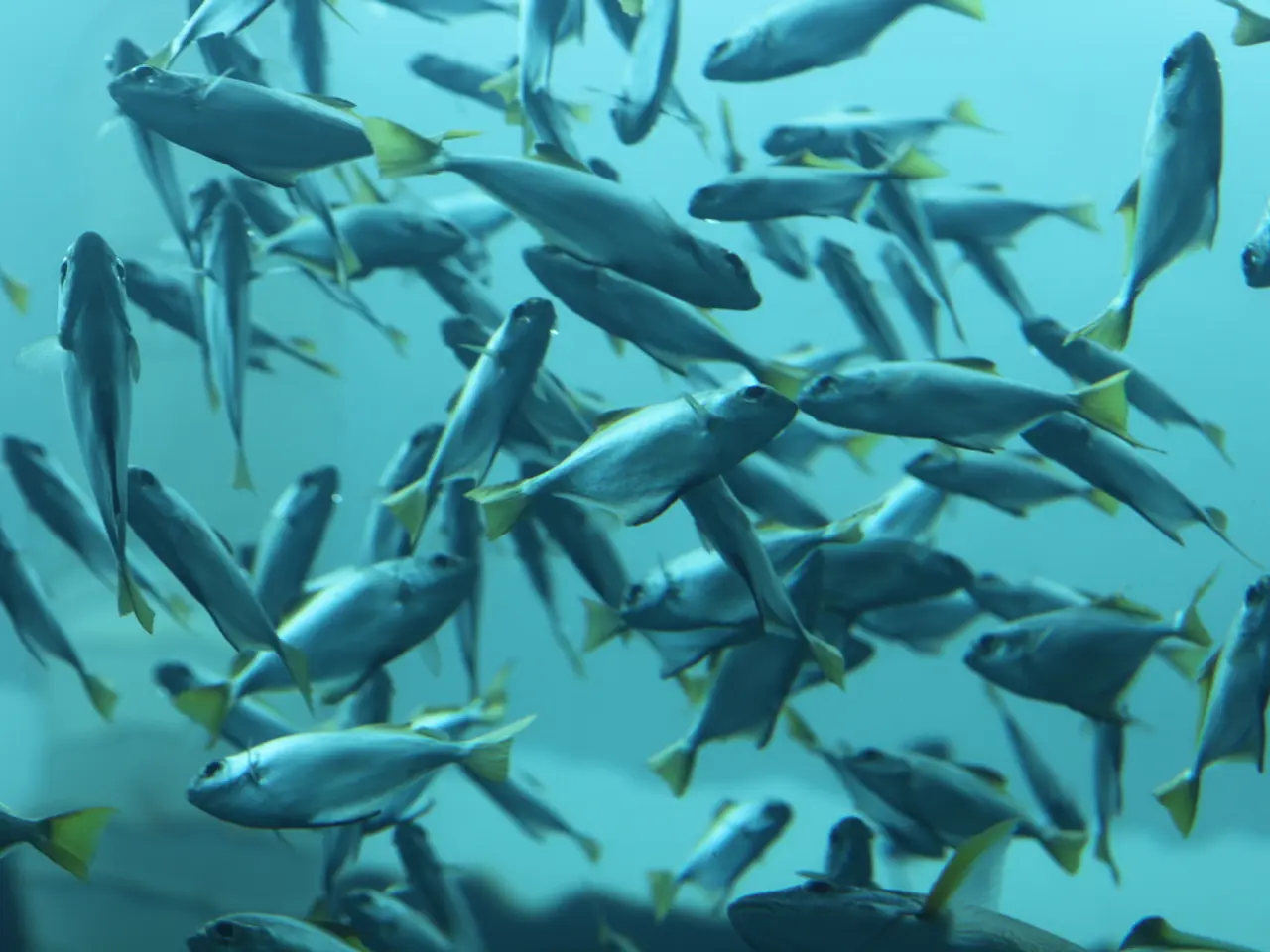
In a recent study published in the Journal of Infectious Diseases, researchers from the University of California San Diego (UCSD) have discovered a concerning public health issue. The study found that more than 90% of popular freshwater game fish in Southern California, such as largemouth bass and bluegill, are infected with two species of flatworms called trematodes: Haplorchis pumilio and Centrocestus formosanus [1].
These parasites, originally from Southeast Asia, were introduced into U.S. freshwater ecosystems around a decade ago via the invasive red-rimmed melania snail, an aquatic snail believed to have arrived in the U.S. more than a decade ago [2]. The trematode's life cycle involves parasitizing three hosts: the red-rimmed melania snail, a fish, and a warm-blooded vertebrate, such as a bird or a human [3].
The potential risks associated with consuming these infected fish primarily involve human infection with these parasites, which can cause a range of health issues. These include gastrointestinal distress, fatigue, weight loss, and in rare severe cases, heart attacks and strokes [2][4][5].
Precautions for safe consumption are crucial because these parasites can infect warm-blooded animals, including humans, when eating raw or undercooked infected fish. According to researchers and FDA guidelines, fully cooking fish or freezing any intended to be eaten raw for at least one week should kill the trematodes, thereby preventing human infection [1].
Despite no official reported cases in the U.S., health officials are not currently required to track such cases, so infections could be underreported or misdiagnosed [1]. The study authors recommend that fish-borne trematode infection be added to the list of diseases doctors are required to report to public health officials.
The study, conducted by Daniel Metz of the University of Nebraska, along with Hechinger and Palmer from UCSD, was carried out by examining 84 fish from seven different species, collected from five popular fishing locations in San Diego County [1].
The University of California San Diego, one of the top 15 research universities in the world, embraces a culture of exploration and experimentation, as evidenced by its world-class facilities such as Scripps Oceanography, which operates a fleet of four oceanographic research vessels, and the Birch Aquarium at Scripps, which welcomes 500,000 visitors each year [6][7].
Hechinger emphasizes the importance of public education about the risk of infection and proper fish preparation, particularly among people who may rely on freshwater fish for food. He also expresses the need for more accurate tracking of fish-borne trematode infections, stating that there haven't been any reported cases but nobody is looking for them [3].
The study authors plan to share their results with public health officials in several Southern California counties to increase awareness. In light of these findings, anglers and consumers in Southern California should avoid eating raw or undercooked freshwater game fish from local waters and ensure thorough cooking or freezing to mitigate infection risk from these invasive parasitic trematodes [1][2][5].
References: [1] Metz, D., Hechinger, C., & Palmer, J. (2021). Prevalence of fish-borne trematodes in Southern California freshwater game fish. Journal of Infectious Diseases. [2] University of California San Diego. (2021, March 15). Invasive parasites found in Southern California freshwater fish. ScienceDaily. [3] Hechinger, C. (2021, March 15). New study highlights unrecognized public health risk from invasive parasites in Southern California freshwater fish. The Conversation. [4] Centers for Disease Control and Prevention. (2021). Haplorchis pumilio. [5] Centers for Disease Control and Prevention. (2021). Centrocestus formosanus. [6] University of California San Diego. (n.d.). Scripps Institution of Oceanography. [7] University of California San Diego. (n.d.). Birch Aquarium at Scripps.
- The Joint Institute for Oceanography and Earth System Science, a collaboration between UC San Diego and the University of Hawaii, conducts research in environmental science that includes oceanographic research and climate change studies.
- Recent advancements in medical-conditions research, particularly in the understanding of chronic diseases, often profit from data-and-cloud-computing solutions, enabling faster processing and analysis of vast amounts of data.
- A significant part of health-and-wellness focuses on fitness-and-exercise routines, which can help maintain a balanced lifestyle, prevent obesity, and significantly reduce the risk of various chronic diseases.
- In the realm of food-and-drink, adhering to proper nutrition is essential for overall health, including minimizing the consumption of processed foods and increasing the intake of fruits, vegetables, whole grains, and lean proteins.
- Mental-health issues, such as depression and anxiety, frequently coexist with chronic diseases, necessitating a comprehensive approach to treatment that addresses both physical and mental illnesses.
- The study on fish-borne trematodes highlights the role of environmental science in public health, demonstrating the potential risks that invasive species can pose due to climate-change effects on ecosystems.
- Investing in personal-finance and understanding the fundamentals of finance can be vital for financial stability, allowing individuals to plan for retirement, save for emergencies, and make informed decisions about their financial future.
- In cybersecurity, the threats posed by hackers and data breaches necessitate ongoing vigilance and investment in security measures, to protect individuals, businesses, and governments from potential financial losses and reputational damage.
- As artificial-intelligence continues to evolve, it promises to transform multiple sectors, including healthcare, finance, and transportation, by making processes more efficient, accurate, and personalized.
- Travel, whether for leisure or business, is an integral part of modern lifestyles, but it's crucial to consider the potential impact on the environment, striving for sustainable practices such as reducing carbon footprints and increasing awareness of different cultures.
- Sports, be it professional or recreational, play a significant role in promoting physical fitness and competitive spirit, while also generating substantial revenue in investments through sports-betting markets.
- Weather patterns, influenced by climate change, can significantly impact various aspects of life, including agricultural production, ecosystems, and infrastructure, highlighting the importance of monitoring and predicting weather conditions using technology and data analysis.