
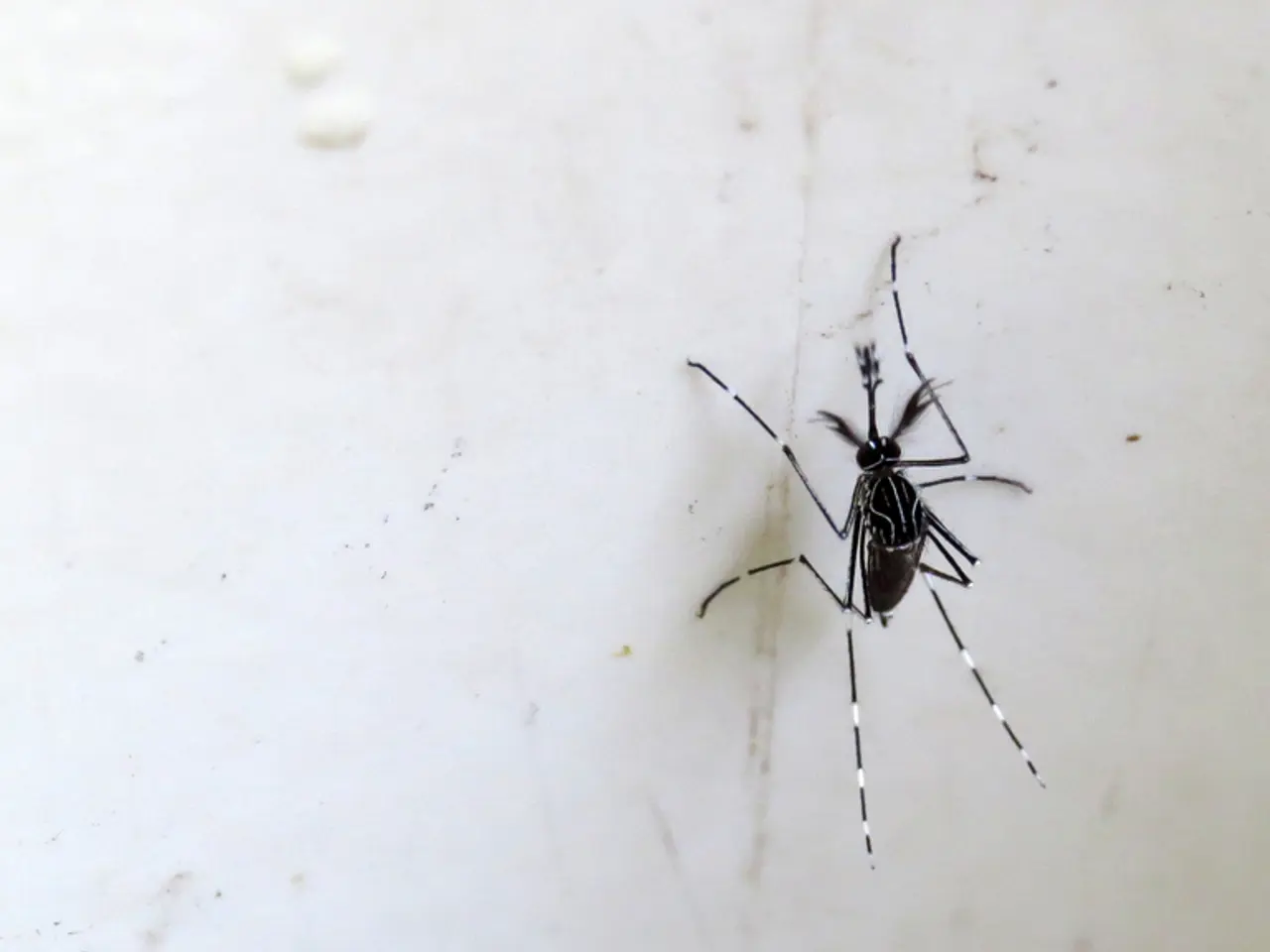
Unforeseen Gravity of Dengue Fever Warned by Specialists, with Symptoms Often Varying in Intensity
In the face of the growing threat of dengue fever, Vietnam is taking proactive measures to combat the disease. Health education, vaccination, and integrated strategies are at the forefront of the nation's efforts to prevent outbreaks and reduce fatalities.
Recent data from the first five months of 2025 reveal a concerning trend: 22,974 cases of dengue and five deaths. This shift from a seasonal outbreak to a year-round public health threat is largely due to urbanisation, migration, and easier travel between regions, making the spread of dengue fever wider and harder to control.
To counter this, the Ministry of Health (MoH) and its official media voice, Suc khoe & Do song, in collaboration with Takeda Vietnam Pharmaceuticals Limited, organised a talk show titled "Towards zero dengue deaths: Collective disease prevention with integrated solutions". The discussion, held in Ho Chi Minh City and Hanoi, highlighted the essential role of vaccines in an integrated dengue prevention strategy.
The integrated strategies for dengue prevention in Vietnam encompass several key areas. Vector control and surveillance, behaviour change communication, strengthening healthcare capacity, and a forecast-prevention model are all crucial components.
1. **Vector Control and Surveillance**: Eliminating mosquito larvae and promoting the use of bed nets and mosquito-killing devices are essential for controlling outbreaks. Investing in active surveillance systems, data analysis, and early warning mechanisms is crucial for sustainable outbreak control.
2. **Vaccination**: Vaccination is recognized as a vital component in preventing severe dengue illness. It supports proactive prevention and reduces the risk of severe illness.
3. **Behavior Change Communication**: Public awareness and education campaigns are vital to change behaviors that contribute to dengue transmission.
4. **Strengthening Healthcare Capacity**: Enhancing the capacity of the healthcare system ensures effective management and treatment of dengue cases.
5. **Forecast-Prevention Model**: Shifting from a 'detection-response' approach to a 'forecast-prevention' model is recommended to keep pace with changes in epidemic cycles and geographic spread.
6. **Long-term Financing**: Ensuring long-term financing tied to shared targets encourages sustained efforts in dengue prevention.
Regional and international collaborations are also vital in the fight against dengue. The "United Against Dengue" (UAD) collaboration, led by the International Federation of Red Cross and Red Crescent Societies (IFRC) and Takeda, aims to enhance community resilience and promote policy advocacy across Asia, supporting the WHO and ASEAN goals.
Takeda's dengue vaccine has been approved in 40 countries, with over 15 million doses distributed globally. The company has made efforts to support the health sector by raising community awareness about dengue. However, it's important to note that dengue has no specific cure, and the unauthorized use of antibiotics, corticosteroids, or IV fluids without a doctor's prescription can worsen the illness.
In response to the increasing number of cases, the Ministry of Health issued an urgent directive in May, calling for strengthened leadership, surveillance, and communication to reduce dengue-related fatalities. Negligence and improper handling can lead to cases of late hospitalisation, severe disease progression, and even death.
As the world moves towards the goal of achieving zero dengue-related deaths by 2030, as set by the WHO, multi-sectoral collaboration is key in effectively controlling dengue. Whether it's through vaccination, vector control, education, or strengthening healthcare systems, the collective efforts of governments, organisations, and communities will be essential in combating this growing public health threat.
- Women's Health: initiatives focused on women and children, who are particularly vulnerable to dengue, are crucial for reducing the impact of the disease.
- Mental Health: addressing the anxiety and stress that come with the fear of dengue fever, and the uncertainty of waiting for results, is also a vital part of the holistic approach to disease prevention.
- Men's Health: educating men about the symptoms and prevention methods, as they often form a large portion of the workforce and travel extensively, is essential in stemming the spread of dengue.
- Fitness and Exercise: regular exercise and maintaining a healthy lifestyle can boost the immune system, making individuals more resistant to diseases like dengue fever.
- Skin Care: proper skin care can help prevent mosquito bites, reducing the risk of dengue transmission.
- Hearing: raising awareness about the risks of dengue fever through public service announcements and other media is essential, even for those with hearing impairments.
- Eye Health: similar to hearing, visual aids can be used to disseminate information about dengue prevention strategies, especially in rural areas where literacy rates may be lower.
- Nutrition: a balanced diet can strengthen the immune system, making individuals less susceptible to diseases like dengue.
- Aging: the elderly are often more susceptible to severe forms of dengue, making it crucial to educate and provide adequate care for this demographic.
- Sexual Health: as dengue can be sexually transmitted through blood, it's important to educate individuals about safe practices to avoid transmission.
- Autoimmune Disorders: individuals with autoimmune disorders may be at a higher risk for severe dengue.
- Digestive Health: a healthy digestive system can aid in the absorption of nutrients needed to boost the immune system's function.
- Respiratory Conditions: some respiratory conditions can weaken the immune system, increasing the risk of severe dengue.
- Cancer: individuals undergoing cancer treatment may have weakened immune systems, making them more susceptible to diseases like dengue.
- Cardiovascular Health: maintaining cardiovascular health through a balanced diet and regular exercise can help prevent severe forms of dengue.
- Climate Change: changes in climate patterns can affect the geographical spread and seasonality of dengue, requiring adaptive measures in disease prevention strategies.
- Environmental Science: understanding the environmental factors that contribute to mosquito populations is essential for effective vector control.
- Finance: long-term financial planning and allocation are necessary for sustained efforts in dengue prevention and control programs.
- Medicare: ensuring access to affordable healthcare for dengue treatment is essential, especially for vulnerable populations.
- CBD: some studies suggest that CBD may have potential benefits for treating inflammatory responses associated with dengue, but more research is needed.
- Neurological Disorders: severe dengue can lead to neurological complications, including encephalitis and nerve damage.
- Therapies and Treatments: while there is no specific cure for dengue, symptomatic treatments can help manage the symptoms and improve recovery.