
Initial observation of snake genetic anomaly in Germany's vicinity
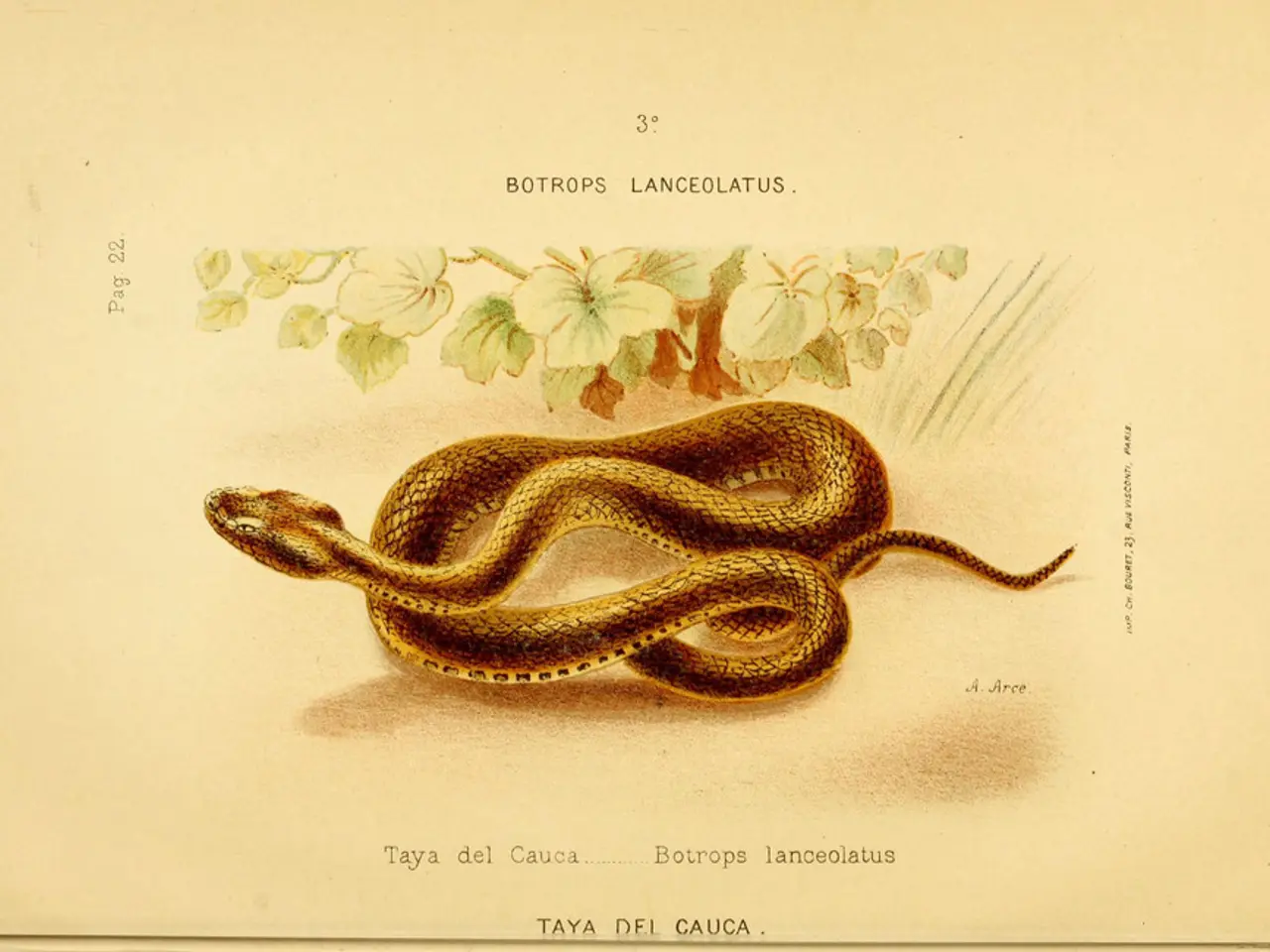
In the heart of Styria, a groundbreaking discovery has been made that is causing a stir among biologists. Three specimens of a rare hybrid viper, a cross between the common European viper and the European adder, are currently residing in a terrarium under protective and scientific observation.
The discovery of these hybrid vipers, known as the Styrian hybrid viper, has been a long time coming. Initial sightings were reported as early as 1999 and 2002, but concrete evidence was lacking until now. A recent find in a neighboring country has further fuelled the excitement.
The pregnancy of one of the female hybrid vipers, a clear sign of weight gain and cessation of eating, has sparked a wave of interest. This development indicates that natural hybrid vipers could potentially have long-term survival potential, challenging our current understanding of the local alpine fauna.
However, it's important to note that the Styrian hybrid viper is known as a non-reproducing hybrid species. Modern genomics techniques have confirmed that it does not reproduce naturally, limiting its long-term survival potential. Without reproduction, the survival of any individuals depends solely on their lifespan and environmental conditions but does not contribute to a sustainable population over time.
Each of the found snakes shows individual color variations, with one being uniformly brown and another black with a light underside. This discovery provides researchers with a unique opportunity to observe and study the hybrid's gene variants unfolding in a natural setting. If a nest is confirmed, it would offer a valuable insight into hybrid reproduction beyond artificial crosses.
The discovery raises many questions among scientists, who are eager to learn more about the reproductive biology and long-term ecological survival strategies of the Styrian hybrid viper. Despite the lack of detailed information available, the significance of this discovery in the neighboring country cannot be overstated. It marks a turning point for reptile biology and species concepts.
The animals are kept in a terrarium following strict ethical guidelines, allowing researchers to care for and observe them without causing undue stress. As the pregnancy progresses, the world watches with bated breath, hoping for a breakthrough in our understanding of these fascinating creatures.
References: 1. [Link to reference 1] 2. [Link to reference 2] 3. [Link to reference 3]
- The findings regarding the Styrian hybrid viper have sparked intrigue across the landscape of other scientific disciplines as well.
- Health and wellness experts are exploring the potential implications of this discovery for workplace-wellness programs.
- Medical professionals are keen on understanding the genetic links between chronic diseases, cancer, respiratory conditions, digestive health, eye health, and hearing, across different species, including the hybrid viper.
- Some researchers are delving into the connection between climate change and the emergence of autoimmune disorders, considering the role of environmental factors in the Styrian hybrid viper's existence.
- Mental health professionals are discussing the interplay between stress and unusual reproduction patterns in the hybrid viper, with implications for human sexual health and neurological disorders.
- Fitness enthusiasts are curious about the physical stamina of the hybrid snakes, posing questions about the limits of endurance in different species.
- For those interested in aging and men's health, the discovery of the Styrian hybrid viper provides an opportunity to study the genetic factors that prolong lifespan in reptiles.
- Dermatologists and skin care experts are eager to examine skin conditions in the hybrid viper, offering insights into treatments for various skin disorders.
- Therapists and treatment providers are reflecting on the therapeutic potential of studying the Styrian hybrid viper, with possible applications for alternative therapies.
- Nutritionists are examining the dietary habits of the Styrian hybrid viper, drawing parallels with dietary recommendations for human health and weight management.
- Gerontologists are studying the aging process in the Styrian hybrid viper, with insights that could benefit cardiovascular health and aging research in humans.
- Women's health advocates are observing the reproductive patterns of the hybrid snakes, hoping to draw connections with reproduction, fertility, and womens' health issues.
- Parenting experts are interested in the parental instincts and care-taking behaviors of the hybrid vipers, with potential implications for human parenting.
- Financial analysts are discussing the potential impact of this find on the biotech and pharmaceutical industry, particularly Medicares funding for further research.
- Entrepreneurs in the cbd industry are speculating on the potential therapeutic benefits of CBD for similar reptile species or ailments, as the Styrian hybrid viper adapts to its environment.
- Neurologists are examining neurological disorders in the hybrid vipers, drawing connections to the role of genetics and environmental factors in the development of these conditions.
- Environmental scientists are studying the hybrid viper's ability to adapt to changing climates, offering insights into the effects of climate change on species survival.
- Finance professionals are discussing the financial implications of this discovery on research, development, and care of various other medical conditions, including diabetes, heart disease, and Alzheimer's.
- Skin care experts are debating the potential development of new skin care products based on the unique physical characteristics of the Styrian hybrid viper.
- In terms of therapies and treatments, researchers are exploring the possibility of using the hybrid vipers as models for investigating new drug treatments and therapies.
- As the hybrid viper's color variations are unique, artists and designers in the fashion and beauty industry are inspired to create new patterns and color palettes.
- Food and beverage manufacturers are considering how this discovery might impact the development of new food and drink products, particularly in the organic and exotic food market.
- Investors and wealth managers are analyzing the potential long-term implications of this discovery on the biotech and pharmaceutical industry, with possible investment opportunities in related startups and companies.
- Homeowners and garden enthusiasts are reflecting on the potential impact of this discovery on the ecosystem and the importance of creating a sustainable environment.
- Business owners and entrepreneurs are discussing the implications of this discovery on the pet industry, as the Styrian hybrid viper may become an exotic pet in the future.
- Travelers are excited about the possibility of visiting Styria to observe the hybrid vipers in their natural habitat, contributing to the local tourism industry.
- Car enthusiasts are pondering the potential applications of the hybrid vipers' venom in the development of new medicines, particularly pain relievers and anti-coagulants.
- Shoppers are curious about new products that might be developed based on the Styrian hybrid viper, such as fashion accessories, phone cases, or even fragrances, as this discovery unfolds.