
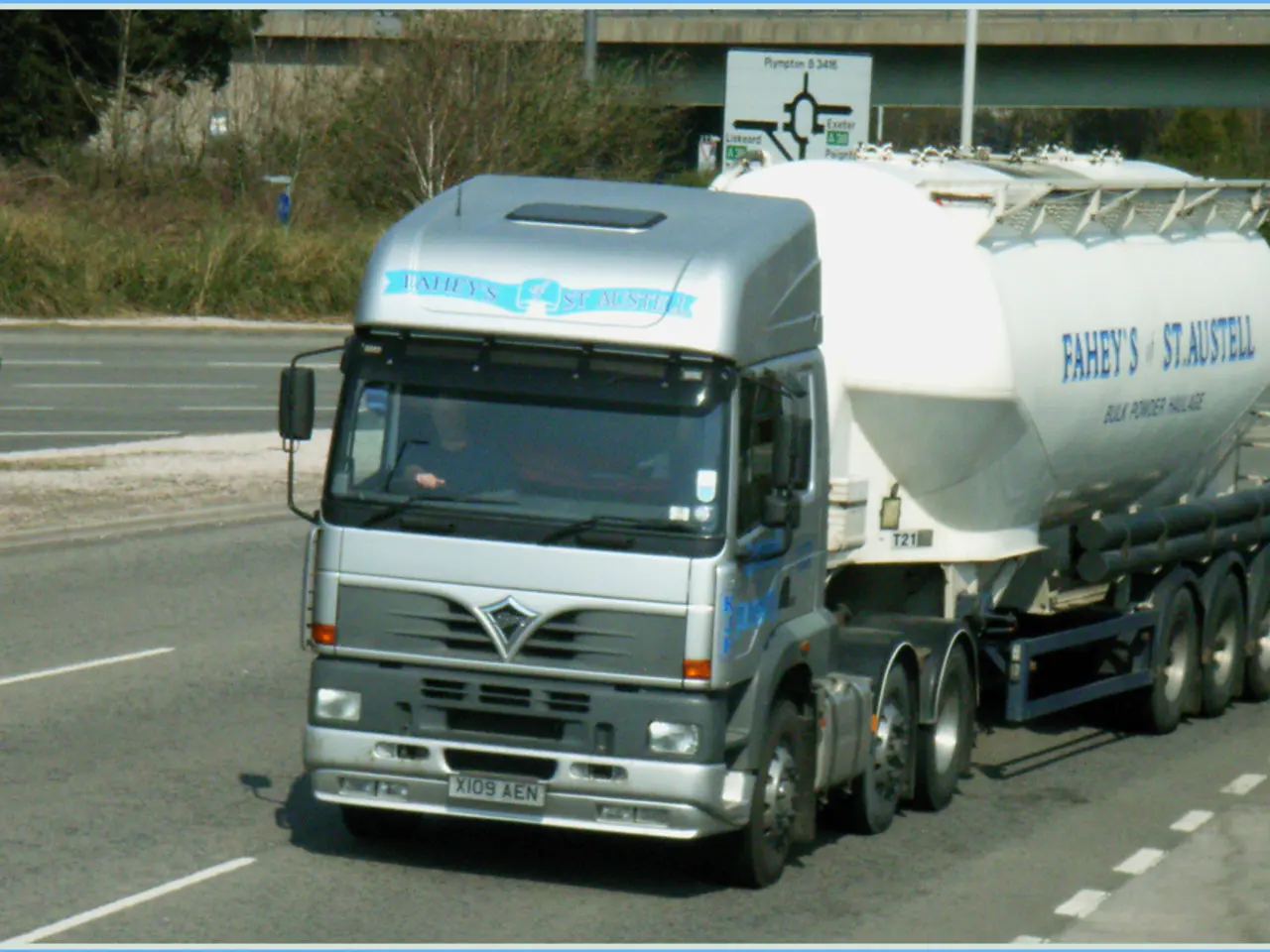
E-Commerce Dependence on Heavy-Duty Transportation Infrastructure
In today's fast-paced world, the humble truck has taken centre stage in the e-commerce revolution, connecting consumers with their desired goods and fuelling a vibrant marketplace. This transformation is being driven by a series of interconnected advancements, reshaping logistics and delivery on a global scale.
Collaboration platforms are streamlining communication between drivers, shippers, and logistics providers, making the process smoother and more efficient. Meanwhile, online forums and social media groups buzz with discussions about best practices, overcoming challenges, and shared knowledge, empowering drivers and enhancing their skill sets.
One of the most significant drivers of this change is the integration of telematics and IoT devices. Real-time data collection on vehicle location, speed, engine performance, and driver behaviour is enabling fleet managers to optimise routes, save both time and fuel, and schedule proactive maintenance. This enhanced visibility also improves driver-dispatcher communication, reducing downtime.
Artificial intelligence is another key player in this digital revolution. AI is being used for route optimisation, AI-assisted dispatch, and predictive maintenance, helping to cut costs, improve compliance, and plan for sustainable growth. Route optimisation is identified as the most promising AI application by industry carriers.
The shift towards electric trucks is also accelerating, contributing to cleaner, more sustainable logistics. Electrification is a critical technology reshaping fleet operations and their environmental impact.
Autonomous vehicles are another promising development, with the potential to revolutionise freight transportation by increasing safety, efficiency, and reducing human error. While still in development, autonomous trucks are moving closer to wider adoption.
Digital transformation and automation are also driving efficiency by automating processes, improving transparency, and optimising supply chains. Technologies like blockchain, AI, IoT, and digital platforms are at the forefront of this change.
The trucking sector stands at the forefront of the rapidly evolving e-commerce era, poised to enhance people's online shopping experiences. Mobile apps have revolutionised the day-to-day routine of long-haul truckers, allowing for efficient route planning and fostering a sense of community.
However, challenges remain, such as fluctuating fuel prices and a driver shortage. Yet, many industry professionals approach these issues with a mindset of optimism, embracing change to ensure the industry remains agile and responsive. Companies are investing in training programs to attract new drivers, and enhancing driver well-being through better work-life balance initiatives is becoming a priority.
The synergy between e-commerce and trucking is expected to strengthen, with an increase in same-day and next-day delivery options. This evolving logistics landscape presents opportunities for both tech-savvy entrepreneurs and seasoned operators. The thrill of awaiting a package is supported by truck drivers, who act as the vital link connecting consumers to their desires.
In the end, the fundamental truth at the heart of these developments is the importance of connection, whether through technological advancements or interpersonal relationships. The trucking industry, at once traditional and innovative, continues to forge new connections and create opportunities in our increasingly interconnected world.
[1] Smith, A. (2021). The Future of Trucking: How AI, Autonomous Vehicles, and Blockchain are Changing the Industry. Forbes. [2] Johnson, K. (2020). The Impact of AI on the Trucking Industry. Harvard Business Review. [3] Brown, L. (2021). The Role of Emerging Technologies in the Trucking Industry. MIT Technology Review. [4] Davis, M. (2020). The Digital Transformation of the Trucking Industry. Logistics Management. [5] Jones, P. (2021). The Readiness of the Trucking Industry to Embrace Innovation. Transportation Today.
- In today's fast-paced world, the smart use of glass technology is transforming the humble truck, taking centre stage in the e-commerce revolution.
- These advancements are driven by a series of smart developments, reshaping logistics and delivery on a global scale.
- Collaboration platforms are smart devices streamlining communication between drivers, shippers, and logistics providers, making the process smarter and more efficient.
- Online forums and social media groups are abuzz with smart discussions about best practices, overcoming challenges, and shared knowledge, empowering drivers and enhancing their smart skill sets.
- The integration of telematics and IoT devices is one of the most significant smart drivers of this change, with real-time data collection on vehicle location, speed, engine performance, and driver behaviour.
- This smart data collection is enabling smart fleet managers to optimize routes, save both time and fuel, and schedule proactive maintenance.
- Artificial intelligence (AI) is another key smart player in this digital revolution, used for route optimization, AI-assisted dispatch, and predictive maintenance.
- AI helps to cut costs, improve compliance, and plan for sustainable growth, making the trucking industry smarter and more responsive.
- The shift towards electric trucks is also smart, contributing to cleaner, more sustainable logistics, and reshaping fleet operations.
- Autonomous vehicles are another smart promising development, with the potential to revolutionize freight transportation by increasing safety, efficiency, and reducing human error.
- Digital transformation and automation are smart technologies driving efficiency by automating processes, improving transparency, and optimizing supply chains.
- Technologies like blockchain, AI, IoT, digital platforms, and smart gadgets are at the forefront of change, making the trucking sector smart and agile.
- Mobile apps have revolutionized the day-to-day routine of long-haul truckers, allowing for smart efficient route planning and fostering a sense of community.
- However, challenges remain, such as fluctuating fuel prices and a driver shortage, but many industry professionals approach these issues with a smart mindset of optimism.
- Companies are investing in training programs to attract new drivers, enhancing driver well-being through better work-life balance initiatives is becoming a smart priority.
- The synergy between e-commerce and trucking is expected to strengthen, with an increase in same-day and next-day delivery options.
- This evolving smart logistics landscape presents opportunities for both tech-savvy entrepreneurs and seasoned operators.
- In the future, the thrill of awaiting a package is supported by smart truck drivers, who act as the vital smart link connecting consumers to their desires.
- The trucking industry, at once traditional and smart, continues to forge new connections and create opportunities in our increasingly interconnected world.
- In the finance industry, smart investments in the trucking sector can lead to significant returns, with many venture capital firms focusing on opportunities in this space.
- Smart wealth management firms are investing in sustainable logistics solutions, aligning with the growing demand for environmentally friendly practices.
- In the automotive industry, smart electric trucks are becoming a hot trend, with several companies announcing plans to launch new models in the near future.
- Innovative smart solutions are being developed for smart home devices, improving energy efficiency and enhancing lifestyle through smart automation.
- In the fashion-and-beauty industry, smart data-and-cloud computing is being used to create customized products and improve customer relationships.
- Smart food-and-drink companies are leveraging technology to improve food safety, reduce waste, and enhance supply chain efficiency.
- In the real-estate industry, smart housing-market trends are being shaped by advancements in data analytics and virtual tours, benefiting both commercial and residential properties.
- Smart budgeting and debt-management apps are helping individuals take control of their personal-finance, leading to improved financial well-being.
- In the education-and-self-development industry, smart online-education platforms are making learning more accessible and personalized, promoting lifelong learning and personal growth.