
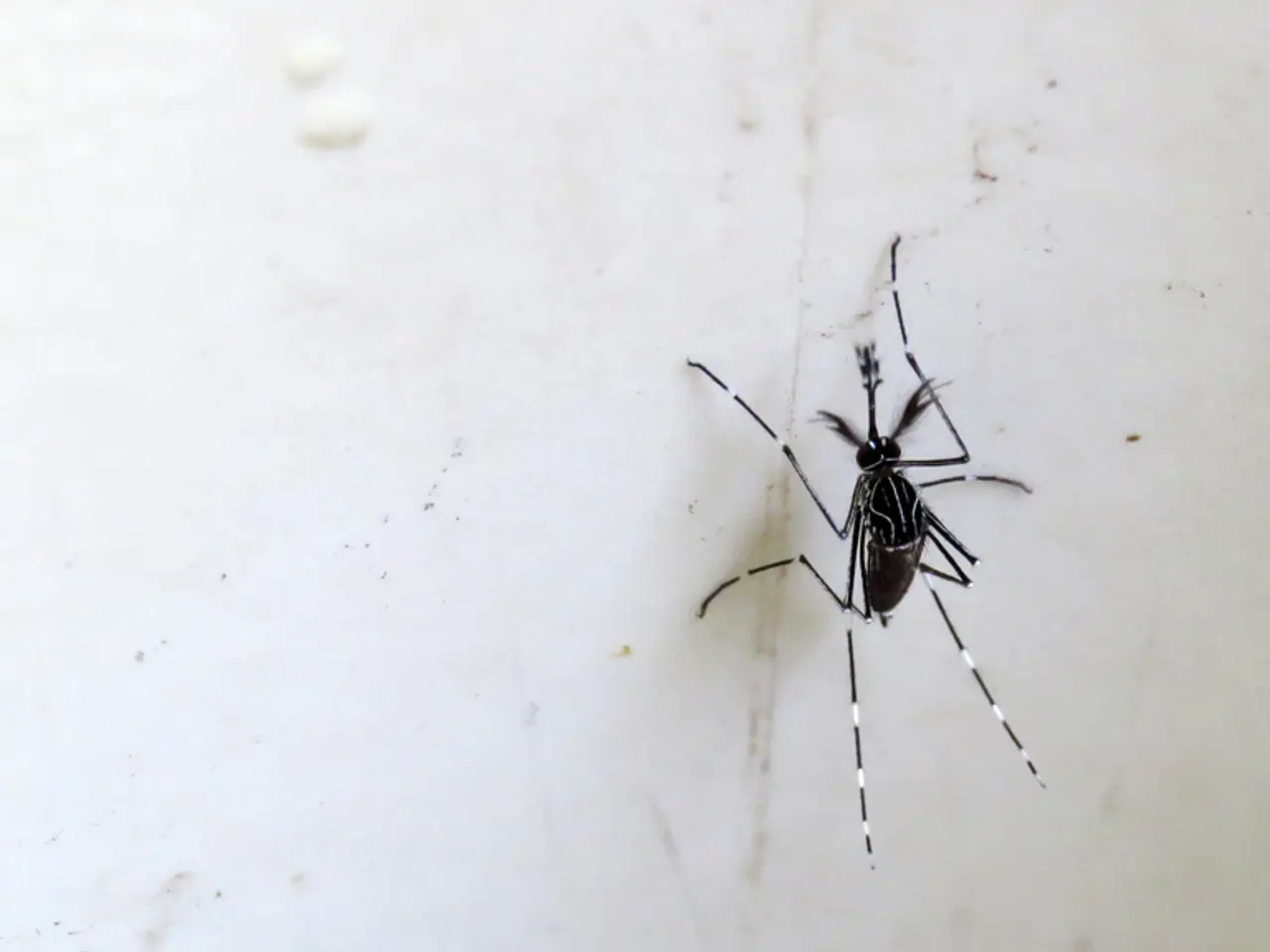
Dengue fever claimed 10 lives in Ho Chi Minh City
In the heart of Vietnam, Ho Chi Minh City (HCM City) is currently grappling with a surge in dengue fever cases, putting immense pressure on the city's health sector. The city government, health sector, and community are working together to coordinate rapid action and curb the spread of the disease.
To combat this epidemic, HCM City has adopted an integrated approach focusing on environmental sanitation, public awareness, medical preparedness, and vector control.
Environmental sanitation campaigns are a crucial part of the strategy. Local health authorities and medical centers conduct regular drives to eliminate mosquito breeding sites, targeting standing water in containers like plant pots, old cans, and discarded tires. These campaigns occur systematically and involve providing chemicals and spraying equipment to suppress mosquito larvae.
Public awareness and community engagement are also essential. Health officials are emphasizing the importance of raising community awareness and encouraging active participation in control measures. Despite ongoing communication campaigns, challenges remain, as some residents fail to cover or empty potential breeding containers, especially in residential areas and places like motorbike repair shops. The city promotes the use of apps to report mosquito breeding sites, urging residents to maintain clean surroundings.
Medical system readiness is another key component. Hospitals in high-risk areas have been instructed to review treatment protocols, provide staff training on outpatient care for dengue, and comply strictly with disease reporting requirements. Coordination with higher-level hospitals ensures prompt treatment of severe cases.
Vector control techniques, such as the use of larvicides, spraying of outbreak sites, and biological control with guppies in ornamental ponds, are deployed to reduce mosquito populations. Residents are advised to use insect repellents, bed nets, mosquito sprays, and electronic insect killers for personal protection.
Surveillance and vigilance are also vital. The city's health authorities closely monitor dengue case trends, virus strain variations, and outbreak clusters to adapt control strategies promptly.
From the beginning of the year to July 15, HCM City recorded 15,546 cases of dengue fever, which is a 2.5-fold increase compared to the same period last year. The HCM City Centre for Disease Control (HCDC) has warned about a sharp rise in dengue fever infections in HCM City.
To strengthen the eradication of mosquito larvae, the Department of Health has directed the HCDC, health centres, and ward and commune health stations to coordinate with local authorities. The health sector is guiding locals to take preventive measures at home to control dengue fever.
Director of HCDC Nguyễn Hồng Tâm stated that the number of dengue fever cases is increasing rapidly, and the epidemic is at its peak. Reducing infections and mortality from dengue fever is a focus in the response to the dengue fever epidemic.
In response, the health sector is promoting instructions on using online medical applications so that people can report areas at risk of mosquito breeding that cause dengue fever outbreaks. The health sector is also promoting communication on dengue fever prevention and control through various channels.
As the number of weekly cases has been increasing since the beginning of June, it is clear that the battle against dengue fever in HCM City is far from over. However, with the city's multi-pronged approach and the community's active participation, there is hope for a successful outcome in curbing the spread of this disease.
- The government in Ho Chi Minh City (HCM City) is employing artificial intelligence for disease tracking and prediction to combat the surge in dengue fever cases.
- Environmental science research is being conducted to identify factors contributing to the breeding of mosquitoes and strategies to mitigate them.
- The government is collaborating with the finance industry to provide necessary funding for dengue fever control measures.
- HCM City is aiming to enhance workplace wellness by advocating for health and safety protocols in workplaces to reduce the risk of disease transmission.
- Medical-conditions publications are being distributed to the public, educating on symptoms, prevention, and treatment of dengue fever.
- Chronic diseases like dengue fever are a major concern for health-and-wellness organizations, and resources are being allocated for their research and management.
- Fitness-and-exercise facilities are advising their members on the importance of maintaining a healthy immune system to fight off dengue fever.
- Sexual-health clinics are urging the public to take precautions during intimate relationships to avoid skin-conditions resulting from dengue fever.
- Autoimmune-disorders patients are encouraged to take extra care during the dengue fever outbreak as they have a higher susceptibility to severe illness.
- With climate change adversely affecting ecosystems, further studies are required to understand its impact on the breeding and spread of mosquitoes carrying dengue fever.
- Mental-health practitioners are working with the community to address anxiety and stress levels related to the dengue fever epidemic.
- Mens-health organizations are supporting the development of targeted educational programs on dengue fever prevention and control.
- Skin-care companies are creating products with mosquito repellent properties to help protect customers from dengue fever.
- Therapies-and-treatments for dengue fever are continuously being researched and developed to improve patient outcomes.
- Nutrition experts are emphasizing the importance of maintaining a balanced diet to boost immune system functioning and resistance against dengue fever.
- Aging populations are at an increased risk for severe dengue fever complications, and the government is working on implementation of elder care policies to support affected individuals.
- Womens-health organizations are coordinating with local health centers to offer prenatal care and strengthen awareness regarding dengue fever risks.
- Parenting education programs are being adapted to educate parents on dengue fever prevention and children's health.
- Weight-management specialists are collaborating with the government to promote healthy lifestyle choices as a preventative measure against dengue fever.
- Cardiovascular-health organizations are working with health authorities to monitor heart-related effects of dengue fever in infected patients.
- Searching for industry-level solutions, companies are investing in innovative mosquito control technologies.
- The Medicare program is working to ensure dengue fever treatments are accessible and affordable for eligible individuals.
- CBD products are being researched for their potential role in easing symptoms and supporting recovery of dengue fever patients.
- Neurological-disorders patients are at a higher risk of experiencing severe dengue fever complications, and intensive care may be required in certain instances.
- Environmental-science students are engaging in research to study the effects of pollution on mosquito populations and disease transmission.
- Finance teams are working to secure funding for health-related infrastructure and resources needed to combat dengue fever in HCM City.
- Skin-conditions resulting from dengue fever treatment are common and require proper care, and dermatology practices are providing relevant advice.
- Space-and-astronomy research can help understand the global impact of dengue fever, contributing to a more comprehensive control strategy.
- Cybersecurity is significant as online health platforms are used in managing and reporting dengue fever cases; therefore, ensuring their protection is crucial.